Morocco itinerary 6 days
morocco itinerary 6 days from Marrakech to the stunning Merzouga Desert via Zagora, exploring the High Atlas Mountains, Ait Ben Haddou, Draa Valley, and Erg Chebbi dunes. Experience camel trekking, breathtaking desert landscapes, and traditional Berber culture. Enjoy nights in desert camps under the starry sky and visits to ancient kasbahs and gorges.
Departure & Return Location
Your hotel
Departure Time
8:00 AM
Price Includes: 6-Day Morocco Desert Tour from Marrakech
Price Excludes: 6-Day Morocco Desert Tour from Marrakech
Highlights
- Cross the High Atlas Mountains via the scenic Tizi n’Tichka Pass.
- Explore Ait Ben Haddou Kasbah, a UNESCO World Heritage Site.
- Discover the Draa Valley, famous for its palm groves and ancient kasbahs.
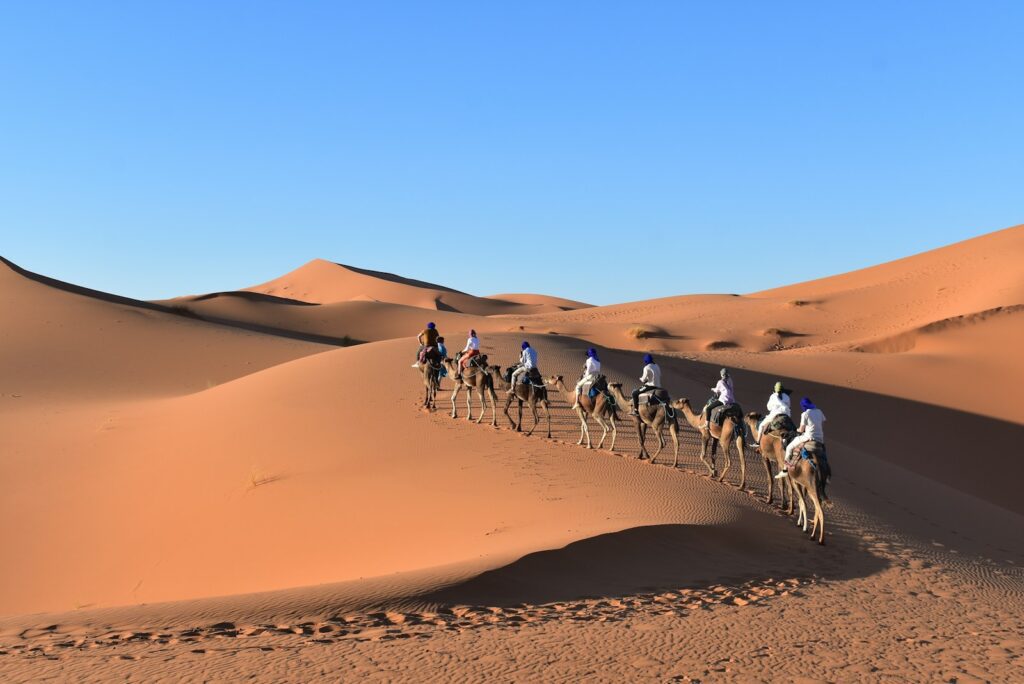
- Experience a camel trek through the stunning dunes of Erg Chebbi.
- Enjoy breathtaking sunsets & sunrises in the Sahara Desert.
- Spend a magical night in a desert camp, with traditional Berber music.
- Visit the Todgha & Dades Gorges, known for their dramatic rock formations.
- Explore authentic Berber villages and experience their warm hospitality.
- Enjoy a comfortable journey in a private 4×4 vehicle or minivan.
- Immerse yourself in Moroccan culture, cuisine, and stunning landscapes.
Day 1: Marrakech to Ouarzazate via Ait Benhaddou
From your hotel in Marrakech, we head towards the High Atlas Mountains. Crossing the Tizi n’Tichka Pass is a highlight, offering breathtaking views of rugged peaks, terraced fields and traditional Berber villages. Your first major stop is Ait Benhaddou, a UNESCO World Heritage Site and one of Morocco’s most iconic kasbahs. This ancient mud-brick fortress has been the setting for countless films and TV shows, and exploring its narrow streets and imposing structures feels like stepping back in time. Next, you’ll continue to Ouarzazate, where you can visit the Atlas Film Studios or relax in your hotel, soaking up the serene atmosphere of this desert city.
Day 2: Ouarzazate to Zagora via the Draa Valley
On the second day, you’ll leave Ouarzazate and head toward Zagora, a journey that takes you through the breathtaking Draa Valley. This lush oasis is a stark contrast to the arid landscapes of the desert, with endless palm groves, traditional kasbahs, and Berber villages dotting the route. Along the way, you’ll stop to admire the scenery, visit local markets, and learn about the region’s rich history and culture. As you approach Zagora, you’ll notice the landscape gradually shifting, with the desert beginning to take over. Zagora itself is a charming town, known for its laid-back vibe and its famous sign pointing to Timbuktu, reminding you of the ancient caravan routes that once passed through here. You’ll spend the night in a comfortable hotel, preparing for the next leg of your journey.
Day 3: Zagora to Merzouga via Rissani and the Erg Chebbi Dunes
The third day is all about the desert. Leaving Zagora behind, you’ll travel deeper into the Sahara, passing through small villages and vast stretches of barren landscape. Along the way, you’ll stop in Rissani, a historic town known for its bustling market and its connection to the Alaouite dynasty, the current ruling family of Morocco. After exploring Rissani, you’ll continue to Merzouga, the gateway to the Erg Chebbi dunes. Here, the real adventure begins as you swap your vehicle for a camel and embark on a peaceful trek into the heart of the desert.
The sight of the golden dunes stretching endlessly before you is awe-inspiring, and watching the sunset over the sands is a moment you’ll never forget. You’ll spend the night in a luxury desert camp, enjoying a traditional Moroccan dinner under the stars and listening to the rhythmic beats of Berber music around a campfire.
Day 4: Merzouga Exploration Todra gorges - Dades Valley
After waking up early to witness the magical sunrise over the dunes, you’ll have the opportunity to explore the area around Merzouga. This includes visiting a local Berber family to learn about their way of life, or taking a 4×4 ride to discover the surrounding desert landscapes, such as the fossil mines and the nomadic settlements. Your next stop is the Todra Gorge, a stunning canyon with towering cliffs that rise up to 300 meters high. Walking through the gorge, with its crystal-clear river and dramatic rock walls, is an unforgettable experience.
Later, we drive toward the Dades Valley. The drive takes you through rugged terrain and small villages, offering a glimpse into the daily lives of the people who call this region home. You’ll arrive in the Dades Valley by evening, where you’ll spend the night in a cozy hotel, surrounded by the valley’s dramatic rock formations and lush greenery.
Day 5: Dades Valley to Marrakech via Todra Gorge and Ouarzazate
Day 5 is filled with natural wonders as you return to Marrakech. Your first stop is Kelaat Mgouna, known for its annual rose festival, then we continue to Skoura Oasis where you visit Kasbah Amridil, then our journey will take us via Ouarzazate and the spectacular High Atals Mountains to Marrakech where your trip will end.
Day 6: Departure from Marrakech
After your breakfast we will transfer you to Marrakech Airport.
Frequently Asked Questions (FAQs)
Is 6 days enough in Morocco?
Yes. Six days allows visitors to experience Marrakech, the Atlas Mountains, kasbahs, and the Sahara Desert.
Can I visit the Sahara Desert in 6 days?
Absolutely. Merzouga and Erg Chebbi dunes are easily included in a 6-day itinerary from Marrakech.
How far is Merzouga from Marrakech?
Approximately 560 km, usually 9–10 hours with sightseeing stops.
Is camel trekking included?
Most desert tours include a camel ride at sunset and sunrise.
What should I pack?
Comfortable clothes, walking shoes, sunglasses, sunscreen, hat, camera, and a jacket for desert nights.
Is Morocco safe for tourists?
Morocco is considered one of the safest travel destinations in North Africa for tourists.
What is the best time to visit Morocco?
Spring (March–May) and autumn (September–November) offer the most pleasant weather.
Can vegetarians find food easily?
Yes. Moroccan cuisine includes many vegetarian options such as tagines, couscous, salads, and fresh produce.
Do I need travel insurance?
Travel insurance is strongly recommended.
Can this itinerary be customized?
Yes. The itinerary can be adapted for families, couples, luxury travelers, and adventure seekers.
Related Tours
12 days tour from Agadir Morocco